The Archive of a Young Revolutionary
KhudiramBose
A schoolboy of Midnapore who became one of the most remembered figures of India’s freedom struggle — and who was dead at eighteen.
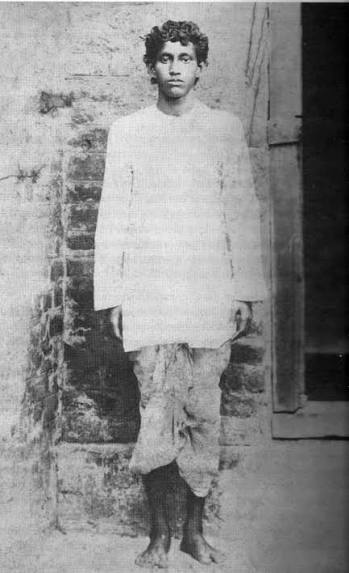
Introduction
He was eighteen years old, and his name outlived every judgement passed upon him.
Khudiram Bose was born in December 1889 in the Midnapore district of Bengal, into a period when British authority in India was rarely questioned aloud and almost never questioned by the young. He was orphaned as a small child, raised by an elder sister, educated in a district school, and by the age of sixteen he had attached himself to one of the underground political societies that had begun to form across Bengal.
In April 1908, together with Prafulla Chaki, he attempted to kill Douglas Kingsford, a British magistrate widely resented by nationalists in Calcutta for the severity of his sentences against young political workers. The attempt failed catastrophically. The carriage they attacked in Muzaffarpur did not carry Kingsford. It carried two British women — Mrs. Kennedy and her daughter — and both of them died.
Khudiram Bose was arrested the following day, tried at Muzaffarpur, convicted of murder, and hanged on 11 August 1908. He was eighteen years and eight months old. Within weeks he had become one of the most widely invoked names in Bengal, and he has remained so for more than a century.
This archive sets out that history in full — the circumstances that produced him, the events he took part in, the people who died, the trial that followed, and the long afterlife of his name in Indian public memory. It does not present the killing of civilians as heroic, and it does not present a boy’s death as uncomplicated. It presents both, in context, as history.
Midnapore, Bengal
Muzaffarpur
Chronology
Nineteen years, set against a changing India
The dates below are the ones on which the principal accounts of his life agree. Where sources differ, the difference is stated rather than smoothed over.
-
3 December 1889
Born in Midnapore district
Born to Trailokyanath Bose and Lakshmipriya Devi. His birthplace is given as Habibpur in most accounts and as Mohobani in others; both refer to the same locality in what is now Paschim Medinipur, West Bengal.
-
c. 1895–1896
Orphaned in early childhood
Both parents died while he was still very young. He was brought up by his elder sister Aparupa Roy and her husband Amritalal Roy, who arranged his schooling.
-
Early 1900s
Schooling at Tamluk and Midnapore
Admitted to Hamilton High School in Tamluk. Midnapore town at this time had an unusually active circle of political reading rooms, gymnasiums and student societies.
-
16 October 1905
The Partition of Bengal takes effect
Lord Curzon’s division of the Bengal Presidency triggered the Swadeshi and Boycott movements. For a generation of Bengali students, this was the political event that defined their youth.
-
c. 1905–1906
Drawn into the Anushilan Samiti
He joined the network of revolutionary societies then spreading through Bengal. Accounts credit Hemchandra Kanungo with recruiting him at Midnapore, and record visits to the town by Sri Aurobindo and Sister Nivedita as formative for its young members.
-
1906
First arrest, at Midnapore
Detained for distributing the nationalist pamphlet Sonar Bangla. He was defended by the barrister Birendranath Sasmal and released. He was sixteen.
-
30 April 1908
The Muzaffarpur bombing
A bomb was thrown at a carriage outside the European Club at Muzaffarpur, in the belief that Magistrate Douglas Kingsford was inside. He was not. Mrs. Kennedy and her daughter, the wife and daughter of the barrister Pringle Kennedy, were fatally injured.
-
1 May 1908
Arrest at Waini; the death of Prafulla Chaki
Khudiram Bose was recognised and arrested at Waini railway station. Prafulla Chaki, cornered at Mokamaghat, shot himself rather than be taken.
-
21 May – 13 June 1908
Trial and death sentence
Tried at Muzaffarpur before Judge Corndoff. Sentenced to death on 13 June 1908.
-
13 July 1908
Appeal dismissed
The Calcutta High Court, hearing the appeal from 8 July, confirmed the conviction and the sentence.
-
11 August 1908
Executed at Muzaffarpur
He was hanged at Muzaffarpur jail. News of the execution spread rapidly through Bengal and the mourning it produced was itself a political event.
Context
The young face of resistance
The Partition of Bengal turned a generation of schoolboys into political actors.
To understand why a district schoolboy ended up on a scaffold in Bihar, it helps to understand what Bengal looked like to someone born in 1889.
He grew up in a province where political life was dominated by petitions, associations and constitutional argument — and where those methods appeared, to many younger people, to have produced very little. Then in 1905 the colonial administration divided Bengal. The partition was presented as an administrative measure; it was received across the province as a deliberate attempt to break the political weight of Bengali society. The response was the Swadeshi movement: the boycott of British goods, the promotion of Indian manufacture, and an extraordinary surge of student participation in public politics.
Out of that surge came something else as well. A minority concluded that agitation alone would not move the state, and formed secret societies — the Anushilan Samiti and, later, the group around the journal Jugantar — organised around physical training, discipline and, eventually, armed action. These societies recruited overwhelmingly from the young: students, schoolboys, men in their late teens and early twenties. Khudiram Bose was one of many thousands drawn towards them, and one of very few whose name survived.
Contents
The archive in five chapters
In closing
The memory of a young life became part of a much larger history.
Editorial statement by khudirambose.com. It is not a historical quotation and is not attributed to Khudiram Bose or to any contemporary source.
Explore his story